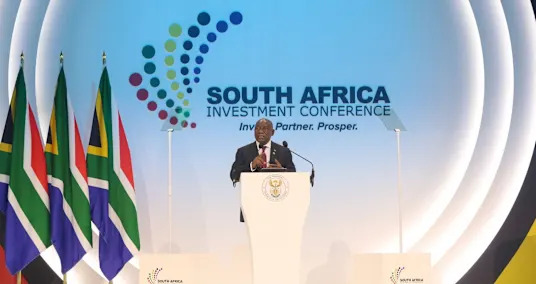
South African President Cyril Ramaphosa launched a nearly $200 billion investment drive aimed at accelerating economic recovery and industrialization in the face of growing worry over the impact of the Iran war on the continent’s biggest economy.
For more than a decade, South Africa’s economy has barely grown, leaving it with crumbling infrastructure and the need to create jobs in a country where one in three people are unemployed. Ramaphosa’s pitch to investors in Johannesburg this week was that South Africa has fixed the worst bottlenecks: He said the country is opening key sectors to private capital and is ready for large scale investments.
Ramaphosa said the effort will run through 2030 with delegates at the South African Investment Conference pledging $53 billion across 31 projects spanning energy, logistics, manufacturing, and digital infrastructure. They include Coca-Cola’s $1 billion expansion plan, and a $3.6 billion commitment from Sasol — the world’s biggest maker of fuel from coal — to upgrade operations.
LATEST POSTS
- 1
 Steinmeier honours Italian 'guest workers' who rebuilt German economy
 - 2Somalia set for 'historic' first offshore oil drilling
- 3How to watch the 2025 Macy's Thanksgiving Day Parade for free
- 4From candy cane fishing to ornament switcharoo, here are some of the best games you can play with your loved ones this holiday season
- 5The Quadrantid meteor shower peaks tonight, but will the full 'Wolf Moon' outshine the show?



- Woman shocked to welcome baby after experiencing stomach pain on Christmas
- Change Your Physical make-up: Compelling Activities for Muscle Building
- NMG signs new graphite supply deal with Canadian Government
- New York to require social media platforms to display mental health warnings
- Family-Accommodating Snow Sports Experiences
- Vote in favor of your #1 Kind of Cap
- Bayer sues COVID vaccine makers over mRNA technology
- One third of Spanish pork export certificates blocked since swine fever outbreak, minister says
- Happy with Running Shoes for 2024